
What is a gemstone?
Minerals, rocks and organic materials; species and varieties; natural, synthetic, imitation and treated stones; and where gems come from.
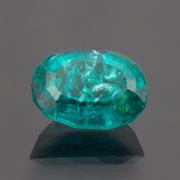
A gemstone is a natural material that is cut, polished or carved and used for adornment or ornament because of its beauty, its durability and its rarity. A stone needs a good measure of all three: a beautiful material that scratches in daily wear is a poor gem, and a durable, attractive material found in every riverbed is rarely valued as one.
That definition is deliberately loose. There is no official list of gemstones, and the materials used as gems change with fashion, with new discoveries and with the skill of cutters. Gemdat.org currently describes 529 gems and varieties, from familiar stones such as diamond, ruby and emerald to collectors' rarities such as benitoite, painite and taaffeite.
Minerals, rocks and organic gems
Most gems are minerals: naturally formed, solid substances with a definite chemical composition and an ordered crystal structure. Of the several thousand mineral species known, only a few hundred have ever been cut, and only a few dozen are found in jewellery shops. Because each mineral has a fixed structure and a narrow range of chemistry, its physical and optical properties (hardness, density, refractive index) fall within known limits. That is what makes identification possible.
Some gems are not single minerals:
- Rocks, which are mixtures of minerals: lapis lazuli (mainly lazurite, with calcite and pyrite) and jade, the name for two different rocks: jadeite and nephrite.
- Mineraloids, natural materials without a regular crystal structure, such as opal and the volcanic glass obsidian.
- Organic gems, made by living things: pearl, coral, amber (fossil tree resin) and jet (fossil wood).
Species and varieties
Gemmologists name gems in two levels. The species is the mineral itself, defined by its chemistry and crystal structure. A variety is a trade name for a particular colour or appearance of that species, and varieties often have very different values:
- Corundum (aluminium oxide) is ruby when it is red and sapphire in every other colour, including the pinkish-orange padparadscha.
- Beryl is emerald when green, aquamarine when blue and morganite when pink.
- Quartz is amethyst when purple and citrine when yellow.
- Chrysoberyl is alexandrite when it changes colour between daylight and incandescent light.
Every gem page on gemdat.org shows where the gem sits in this family tree: its varieties, the species it belongs to, and other names it is sold under.
"Precious" and "semi-precious"
Diamond, ruby, sapphire and emerald were traditionally called the "precious" stones and everything else "semi-precious". The distinction is misleading (a fine demantoid garnet or Paraíba tourmaline can be worth far more than an ordinary sapphire) and the trade increasingly avoids it. Value depends on the individual stone, not on which group its name belongs to; see How are gemstones valued?
Natural, synthetic, imitation and treated
The same name can describe very different materials, so the trade uses careful terms:
- Natural: formed by nature, without human help. It may still be cut and polished.
- Synthetic or laboratory-grown: made by people, with essentially the same chemistry, crystal structure and properties as the natural gem. Synthetic ruby has been made since the 1880s; synthetic emerald, sapphire, spinel, quartz and diamond are all common today.
- Imitation or simulant: anything that only looks like the gem. Glass, plastic and other materials can imitate almost anything; cubic zirconia and moissanite are popular diamond simulants.
- Treated: a natural gem whose colour, clarity or durability has been improved by heating, filling, irradiation, diffusion, dyeing or coating. Many treatments are routine and stable; others need special care. See Gemstone treatments.
- Composite or assembled: pieces joined together, such as an opal doublet or a garnet-and-glass doublet.
All of these should be disclosed when a gem is sold. Telling them apart is a large part of gemmology; see How are gemstones identified?
Where gems come from
Gems form wherever the right chemistry meets the right conditions, in three broad settings:
- Igneous: crystallised from molten rock. Pegmatites, the coarse-grained last stage of granites, give large crystals of tourmaline, beryl and topaz. Diamond is carried up from the mantle in kimberlite; peridot and some sapphire come up in basalt.
- Metamorphic: formed when existing rocks are changed by heat and pressure. Many rubies grow in marble, and tanzanite, tsavorite and jade are metamorphic too.
- Sedimentary: formed at or near the surface. Opal forms from silica-rich water in cracks and cavities, and turquoise where copper-bearing water percolates through rock.
Because gems are hard and dense, rivers concentrate them in gravels long after the host rock has weathered away. Many of the world's gem fields, in Sri Lanka, Myanmar and Madagascar, are mined from these alluvial deposits. Each gem page shows its known localities on a map, and the localities section lists the gems found in each country.
What makes a good gem material
Beyond colour and brilliance, a gem has to survive being worn. Gemmologists think about durability in three ways:
- Hardness, resistance to scratching, measured on the Mohs scale from 1 (talc) to 10 (diamond). Household dust contains quartz (hardness 7), so softer stones slowly lose their polish.
- Toughness, resistance to chipping and breaking. Diamond is the hardest material but can split along its cleavage; jade is only about 6 to 7 in hardness but is exceptionally tough.
- Stability, resistance to heat, light and chemicals. Opal can crack if it dries out, pearls are damaged by acids and cosmetics, and some colours fade in sunlight.
The property tables on each gem page, and the identification notes with their care advice, give these figures for each gem.