
How are gemstones identified?
From the loupe and refractometer to Raman and FTIR: how gemmologists tell one gem from another, and natural from synthetic or treated.
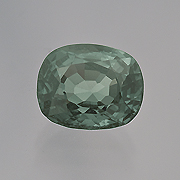
Many different materials can look alike. A red stone might be ruby, spinel, garnet, tourmaline, glass or synthetic ruby; a colourless one could be diamond, cubic zirconia, moissanite, zircon, topaz, quartz or glass. Gemmologists identify a stone by measuring properties that depend on its chemistry and crystal structure, and by reading the clues inside it. No single test is enough on its own: identification means building up a consistent picture from several.
Most of the tests below do no harm to the stone, which matters for a finished gem.
Looking carefully
A 10× loupe and a gemmological microscope are the most important tools. They show:
- Surface and lustre: how the stone reflects light (adamantine, vitreous, waxy), the quality of polish, wear on facet edges (soft stones and glass show rounded, scratched edges) and the shape of chips (conchoidal fractures in glass and quartz).
- Doubling: in strongly doubly refractive stones such as zircon, peridot and moissanite, the back facet edges appear doubled.
- Inclusions, often the most telling evidence. Fine "silk" needles in natural corundum, the curved "horsetail" fibres in demantoid, the "lily pads" in peridot, and the three-phase inclusions (liquid, gas bubble and crystal) in Colombian emerald each point to one gem. Curved growth lines and gas bubbles betray flame-fusion synthetics and glass.
Gemdat records typical inclusions on gem pages and photographs them in the inclusion and micro photo collection.
Refractive index
Light slows down and bends as it enters a gem; the refractive index (RI) measures how much. A refractometer reads it to three decimal places from a polished facet placed on a glass prism with a drop of contact liquid. The RI is one of the most useful single figures: corundum reads about 1.762–1.770, spinel about 1.718, quartz 1.544–1.553.
The refractometer shows more than one number:
- Singly refractive (isotropic) gems, from the cubic crystal system or without a crystal structure (spinel, garnet, diamond, glass), give one reading.
- Doubly refractive gems give two readings as the stone is turned. The difference is the birefringence (0.008 for corundum, 0.009 for quartz, about 0.036 for peridot).
- How the two readings move tells whether the gem is uniaxial or biaxial and gives its optic sign (positive or negative), which separates gems with overlapping RIs.
Standard refractometers cannot read above about 1.81, so diamond, zircon and many simulants read "over the limit": a clue in itself.
Specific gravity
Specific gravity (SG) is a gem's density relative to water. It is measured by weighing the stone in air and in water (hydrostatic weighing), or estimated with heavy liquids in which some gems float and others sink. Corundum is about 4.00, spinel 3.60, quartz 2.65 and emerald about 2.7.
Polariscope, dichroscope and colour filters
- The polariscope shows whether a stone is singly or doubly refractive, and can reveal the interference figure that shows uniaxial or biaxial character. Strain in glass and in some synthetics shows as anomalous patterns.
- The dichroscope shows pleochroism: doubly refractive coloured gems can show two or three different colours in different directions. Strongly pleochroic gems such as iolite, tanzanite and alexandrite are easy to recognise this way.
- The Chelsea colour filter transmits deep red and yellow-green light. Chromium-coloured gems such as many emeralds and rubies appear red or pink through it, while green glass and many imitations stay green.
The hand spectroscope
A spectroscope spreads white light that has passed through the stone into a spectrum, showing dark bands where the gem absorbs particular wavelengths. The patterns are characteristic: sharp chromium lines in the red for ruby, red spinel, emerald and alexandrite; iron bands in the blue for sapphire and peridot; the strong 653.5 nm line of zircon; the three almandine bands of red garnets. Gemdat's spectra pages show visible absorption spectra of many gems.
Ultraviolet fluorescence
Under long-wave and short-wave ultraviolet lamps, some gems glow (fluoresce). Ruby and red spinel glow red; many diamonds glow blue; some synthetics and treated stones fluoresce differently from natural ones, and resins and oils in fractures often show up. Fluorescence is supporting evidence rather than proof, because it varies between stones of the same gem.
Diamond and simulant testers
Diamond conducts heat far better than its simulants, so a thermal tester quickly separates diamond from cubic zirconia and glass. Moissanite also conducts heat well, so testers that additionally measure electrical conductivity are used to separate it. Separating natural from laboratory-grown diamond needs laboratory instruments.
Laboratory methods
Treatments, synthetics and origin often need more than standard instruments. Gemmological laboratories use spectroscopy and chemical analysis:
- FTIR (infrared) spectroscopy detects water and hydroxyl in a stone, polymers and oils used to fill fractures, and the nitrogen-based types of diamond.
- Raman spectroscopy gives a fingerprint of the mineral itself, identifying a gem (or an inclusion inside it) in seconds.
- Photoluminescence (PL) detects tiny defects and trace elements, and is used to spot heating, irradiation and laboratory-grown diamonds.
- UV-Vis-NIR absorption spectroscopy measures the causes of colour, helping to detect treatments and indicate origin.
- Chemical analysis (X-ray fluorescence, laser ablation ICP-MS) measures trace elements, used for origin and to detect beryllium diffusion.
Gemdat's reference spectra library holds FTIR, Raman, PL and UV-Vis spectra of documented natural, treated and synthetic stones for comparison.
Putting it together: an example
A transparent blue stone reads 1.762 and 1.770 on the refractometer: doubly refractive, birefringence 0.008, uniaxial negative. Its SG is 4.00. These figures fit corundum, so it is a sapphire. Under the microscope it shows fine intersecting needles and slightly angular colour banding, not the curved bands and gas bubbles of a flame-fusion synthetic, so it is natural. Whether it has been heated, and where it came from, are questions for a laboratory.
You can try the same reasoning with gemdat's search by property: enter the readings you have, and every gem is scored against them.